Maternal Autoantibody-Related Autism: What We Know and What It Means
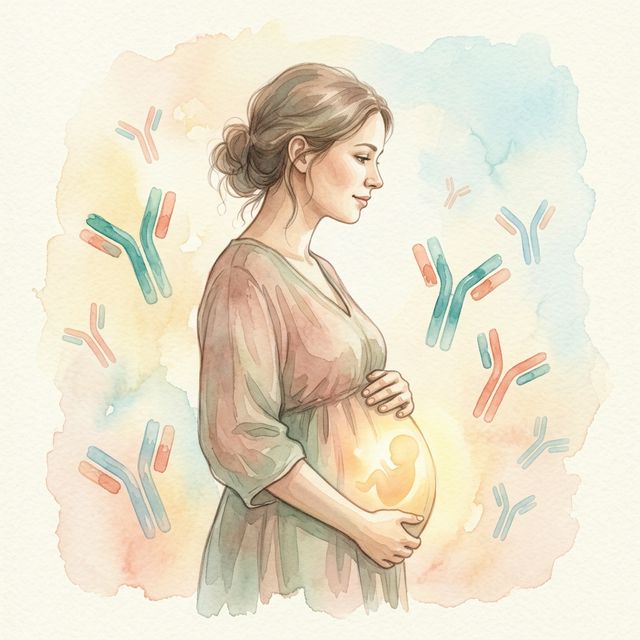
Most of the genetics I write about on this site concerns inherited DNA variants that influence brain development. But there is another biological route to autism that has nothing to do with a change in the child’s own DNA. It involves the mother’s immune system, and it may account for up to a quarter of all autism cases. Most parents have never heard of it.
The basic mechanism
During pregnancy, the mother passes protective antibodies (IgG) across the placenta to the baby. This is normal. It is how newborns have some immunity to infections before their own immune system is fully working.
In some mothers, the immune system also produces autoantibodies — antibodies that mistakenly target the body’s own proteins. In MAR (Maternal Autoantibody-Related) autism, these autoantibodies happen to bind to specific proteins that are essential for fetal brain development. They cross the placenta, reach the developing brain, and disrupt how those proteins do their job (1, 2).
The brain still develops, but it develops differently.
How this was found
The work came out of UC Davis, led by immunologist Judy Van de Water. Her team found that blood from some mothers of autistic children contained antibodies that reacted with fetal brain tissue in the lab. Not all mothers — not even most — but a significant number, and at rates far higher than in controls (3).
The next step was to identify exactly which proteins these antibodies were targeting. In 2013, Braunschweig and Van de Water published the answer: seven specific fetal brain proteins (4). These are not obscure molecules. They are proteins involved in how neurons grow, branch, migrate, and connect:
- CRMP1 and CRMP2 — neuronal growth and axon guidance
- GDA (cypin) — dendrite branching
- LDHA and LDHB — metabolic enzymes that neurons depend on for energy
- STIP1 — neuroprotection and neuronal differentiation
- YBX1 — regulation of gene expression during brain development
A 2021 analysis added an eighth target, NSE (neuron-specific enolase), and identified that specific two-protein combinations of these autoantibodies were particularly predictive (5).
The numbers
The prevalence figures are striking. Depending on the study and which patterns are measured, MAR autoantibody patterns are found in roughly 18 to 26 percent of mothers of autistic children. In control mothers, the same patterns appear in fewer than 1 to 4 percent (4, 5, 6).
If even the lower estimate holds, MAR autism would be more common than every single identified monogenic cause of autism combined. Fragile X, PTEN, SHANK3, SCN2A — each accounts for well under 1 percent of cases individually. MAR autism, if confirmed at scale, is in a different league.
Which antibody combinations matter
Not all combinations carry equal risk. Three patterns stand out:
CRMP1 + CRMP2 — increased the odds of autism roughly 16-fold and was not detected in any non-autism controls (6).
CRMP1 + GDA — associated with a 31-fold increase in odds (4, 6).
NSE + STIP1 — also significantly associated (5).
The specificity is very high: when these patterns are present, the likelihood of autism in the child is very high. But most mothers of autistic children do not carry them. MAR is a subtype, not the whole picture.
What MAR autism looks like
On average, children whose mothers carry MAR autoantibodies tend to have higher autism severity scores on standardised measures like the ADOS, more prominent repetitive behaviours, and larger brain volumes. There is no consistent difference in IQ or adaptive functioning compared to autistic children without MAR (7, 8).
The macrocephaly finding connects to a broader literature on brain overgrowth in autism. Several of the target proteins are involved in neural cell proliferation, so it makes biological sense that disrupting them during fetal life could lead to overgrowth.
The animal evidence
This is where the research becomes particularly persuasive. If MAR autoantibodies genuinely cause autism-relevant brain changes, then transferring them into pregnant animals should produce similar effects in the offspring. That is exactly what happens.
In a mouse model, Jones, Edmiston, and Van de Water (2020) immunised female mice to generate these specific autoantibodies. The offspring showed reduced social interaction, increased repetitive behaviours, and altered brain development (9).
In primates, rhesus macaques exposed to MAR autoantibodies during gestation showed social abnormalities and enlarged brain volumes, matching the human findings (10).
These are not just correlations. The animal work demonstrates a causal mechanism.
The test
A commercial blood test exists — the MAR-Autism Test — that checks maternal blood for these autoantibody patterns (11).
If a mother tests positive and already has a child with autism, the probability that her child’s autism is MAR-related is reported as very high (over 97 percent). A positive result also tells you something about recurrence risk: the autoantibodies are likely to be present in future pregnancies too (12).
A negative result does not rule out autism. It rules out this particular immune-mediated pathway.
The test is not available through the NHS and is not in routine clinical use in the UK. There is currently no validated intervention to block or neutralise these autoantibodies during pregnancy, so the clinical actionability beyond explanation and recurrence risk counselling is limited.
What we do not know
Why do some mothers develop these autoantibodies? Nobody knows. Autoimmune conditions are more common in mothers of autistic children broadly (13), and it is plausible that infections, environmental exposures, or pre-existing immune dysregulation contribute. But the specific trigger has not been identified.
Whether it interacts with genetic risk is also unclear. A child could have both MAR exposure and inherited genetic variants. Whether those effects are additive or independent is an open question.
There is no way to prevent it. Theoretical approaches such as plasmapheresis carry real risks and are not justified by current evidence. The most practical use of this research, right now, is early identification: if you know a child was MAR-exposed, you can prioritise early intervention.
What this means in clinic
Clinicians seeing autistic children should consider asking about maternal autoimmune history. Thyroid disease, rheumatoid arthritis, lupus, type 1 diabetes — the association between maternal autoimmune disease and autism risk is well established (13), and MAR may be one of the mechanisms behind it. An autistic child with macrocephaly and a mother with autoimmune disease is a clinical picture worth noting.
Parents should know that MAR autism is not caused by anything the mother did or did not do during pregnancy. It is not caused by diet, stress, or lifestyle. It is an immune phenomenon that the mother did not choose and cannot control.
Why this matters
MAR autism sits at a point where immunology and neurodevelopment overlap — a field that is growing but still underappreciated in everyday clinical practice. The broader concept of maternal immune activation affecting fetal brain development has been around for decades. What this work adds is molecular specificity: the exact proteins, the exact antibody patterns, the exact phenotype.
That level of detail is rare in autism research. It is also what makes this line of investigation potentially actionable in the longer term, whether through screening, early intervention, or eventually prevention.
For now, the most useful thing is simply knowing about it. MAR autism accounts for a meaningful proportion of cases, it has a defined mechanism, and it produces a recognisable clinical picture. If you work with autistic children or you are a parent trying to understand your child’s diagnosis, it is worth knowing that this pathway exists.
References
- Dalton P, et al. Maternal neuronal antibodies associated with autism and a language disorder. Annals of Neurology. 2003;53(4):533-537.
- Braunschweig D, Van de Water J. Maternal autoantibodies in autism. Archives of Neurology. 2012;69(6):693-699.
- Zimmerman AW, et al. Maternal antibrain antibodies in autism. Brain, Behavior, and Immunity. 2007;21(3):351-357.
- Braunschweig D, et al. Autism-specific maternal autoantibodies recognize critical proteins in developing brain. Translational Psychiatry. 2013;3(7):e277.
- Ramirez-Celis A, et al. Maternal autoantibody profiles as biomarkers for ASD and ASD with co-occurring intellectual disability. Molecular Psychiatry. 2021;27:3240-3248.
- Ramirez-Celis A, et al. Risk assessment analysis for maternal autoantibody-related autism (MAR-ASD): a subtype of autism. Molecular Psychiatry. 2022;27(5):2579-2588.
- Edmiston E, et al. Assessing the relationship between clinical endophenotypes and maternal immune profiles in autism. Molecular Autism. 2023;14:13.
- Braunschweig D, et al. Maternal autoantibodies are associated with abnormal brain enlargement in a subgroup of children with autism spectrum disorder. Brain, Behavior, and Immunity. 2013;30:61-65.
- Jones KL, et al. Autism-specific maternal autoantibodies produce behavioral abnormalities in an endogenous antigen-driven mouse model of autism. Molecular Psychiatry. 2020;25(11):2994-3009.
- Bauman MD, et al. Maternal antibodies from mothers of children with autism alter brain growth and social behavior development in the rhesus monkey. Translational Psychiatry. 2013;3(7):e278.
- MAR-Autism Test. MARA Bio, Inc. marautism.com.
- Brimberg L, et al. Caspr2-reactive antibody cloned from a mother of an ASD child mediates an ASD-like phenotype in mice. Molecular Psychiatry. 2016;21(12):1663-1671.
- Chen SW, et al. Maternal autoimmune diseases and the risk of autism spectrum disorders in offspring: a systematic review and meta-analysis. Behavioural Brain Research. 2016;296:61-69.
Dr Odet Aszkenasy is a Consultant Community Paediatrician and the author of The Genetics of Autism: A Guide for Parents and Professionals.