Tummy Troubles in Autistic Children: A Practical Guide for Parents
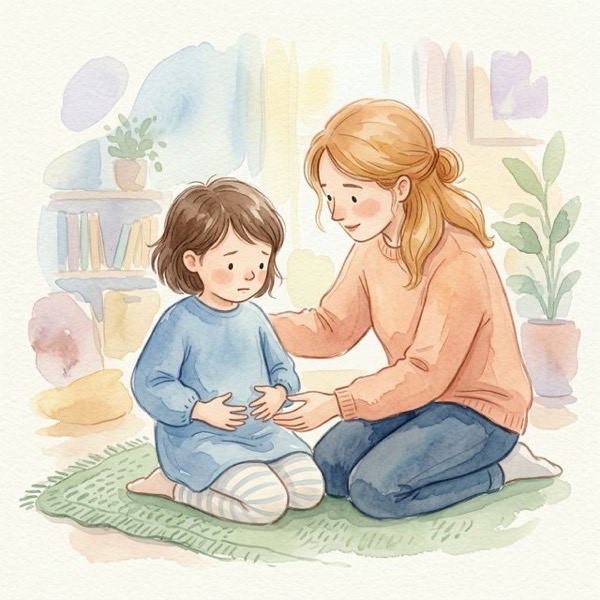
If your autistic child frequently complains of tummy aches, refuses foods, has irregular bowels, or shows distress that you suspect might be related to their gut, you are dealing with one of the most common and most overlooked aspects of autism. Gastrointestinal (GI) problems in autistic children are not rare, not imagined, and not simply “behavioural.” They are a real clinical issue that deserves proper attention.
How Common Are GI Problems in Autism?
A large meta-analysis by Holingue and colleagues found that autistic children are approximately four times more likely to experience GI symptoms than non-autistic peers (1). The most commonly reported problems are:
- Constipation (the single most common GI issue)
- Diarrhoea
- Abdominal pain
- Gastro-oesophageal reflux
- Food selectivity leading to dietary imbalance
Prevalence estimates vary, but studies consistently report that between 40 and 70 percent of autistic children experience at least one significant GI symptom (2).
Why Are GI Problems More Common?
There is no single explanation. Several factors converge:
Dietary restriction. Many autistic children eat a very limited range of foods, often driven by sensory preferences (for specific textures, colours, or temperatures) or rigid routines. A diet low in fibre and fluid naturally increases the risk of constipation.
Sensory processing differences. Some children may not recognise or may misinterpret internal signals from their gut. Pain may be expressed as behavioural change rather than a verbal complaint, particularly in minimally verbal children.
Anxiety and stress. The gut-brain axis is not a metaphor. Stress hormones directly affect gut motility, secretion, and sensitivity. Given the high rates of anxiety in autistic children, this is a significant pathway.
Medication effects. Several medications commonly prescribed for autistic children can affect the gut. Risperidone and other antipsychotics can cause constipation and weight gain. Melatonin, while generally well-tolerated, occasionally affects bowel habits.
Microbiome differences. Emerging research consistently shows that the gut microbiome in autistic individuals differs from that of non-autistic controls, although we are still far from understanding what this means clinically. The microbiome field is exciting but premature for most treatment recommendations (3).
Recognising Pain in Children Who Cannot Easily Tell You
This is one of the most important and challenging aspects. A child who cannot say “my tummy hurts” may instead show:
- Increased self-injurious behaviour
- Changes in sleep patterns
- Pressing their abdomen against furniture or the floor
- Unusual posturing
- Increased irritability or aggression
- Food refusal (new or worsened)
- Changes in facial expression during or after meals
If your child’s behaviour changes and you cannot identify an obvious reason, GI discomfort should always be on the list of possibilities.
Constipation: The Hidden Epidemic
Constipation deserves its own section because it is staggeringly common, frequently missed, and has cascading effects.
A child is constipated if they pass fewer than three stools per week, if stools are hard or painful, or if they are withholding (deliberately avoiding going because of discomfort or anxiety). Many parents do not realise their child is constipated because overflow soiling, where soft stool leaks around a mass of hard stool, can look like diarrhoea.
Chronic constipation can cause abdominal pain, reduced appetite, irritability, and can completely prevent successful toilet training. It is treatable, but it often requires sustained management over months rather than a quick fix.
What helps:
- Adequate fluid intake (often a challenge with selective eaters)
- Increasing fibre gradually where the child will accept it
- Movicol (macrogol) or lactulose as prescribed by your GP or paediatrician. These are safe for long-term use and are the mainstay of treatment
- A consistent toileting routine, sitting on the toilet after meals for 5 minutes with a footstool to support optimal positioning
- The “squatty potty” position genuinely helps: knees above hips, leaning slightly forward (4)
When to See the GP
You should make an appointment if:
- Your child has persistent abdominal pain lasting more than two weeks
- There is blood in the stool
- Your child is losing weight or failing to gain weight
- There is persistent vomiting
- Bowel habits have changed significantly and suddenly
- You suspect overflow soiling
- Your child’s behaviour has changed and you cannot identify another cause
Do not let anyone dismiss your concerns with “autistic children often have behaviour problems.” GI pain is a medical issue, and autistic children deserve the same diagnostic workup as any other child.
What About Special Diets?
Parents frequently ask about gluten-free and casein-free (GFCF) diets. The evidence here is limited and mixed. A Cochrane review found insufficient evidence to recommend GFCF diets as a treatment for autism (5). However, some individual children do seem to improve, and there are plausible mechanisms by which food intolerances could affect behaviour and wellbeing.
If you want to try a dietary change:
- Do it one change at a time so you can assess the effect
- Keep a diary of symptoms, behaviour, and diet for at least 4 weeks before and after
- Ensure nutritional adequacy, particularly calcium and vitamin D if removing dairy
- Involve a dietitian if possible, especially for children with already restricted diets
Probiotics are widely marketed but the evidence for their use in autism-related GI symptoms remains weak. A systematic review found some promising signals but no consistent benefit across studies (6). They are generally safe, but they are not a substitute for addressing underlying issues like constipation or food selectivity.
The Gut-Brain Connection: What We Know and What We Do Not
The gut-brain axis is real neuroscience, not alternative medicine. The vagus nerve provides a direct communication pathway between the gut and the brain. The gut produces approximately 90 percent of the body’s serotonin. The microbiome produces neurotransmitters and metabolites that can influence brain function.
What we do not yet know is how to translate this science into specific treatments. Claims that “healing the gut” will “cure” autism are not supported by evidence and can cause real harm by diverting families from effective support.
What we can say is that a healthy, comfortable gut supports better sleep, better mood, better attention, and better engagement with the world. That is worth pursuing for its own sake.
Practical Steps for Parents
- Track bowel habits. A simple diary of frequency, consistency (the Bristol Stool Chart is helpful), and any associated symptoms builds a picture your GP can use.
- Do not ignore behaviour changes. Consider whether GI discomfort could be a factor, especially in minimally verbal children.
- Address constipation proactively. It will not resolve on its own in most cases and needs treatment.
- Work with your child’s sensory preferences when trying to improve diet. Small, gradual changes are more sustainable than dramatic overhauls.
- Keep a food diary if you suspect specific intolerances. Pattern recognition over weeks is more reliable than guesswork.
- Advocate at medical appointments. If you believe your child is in pain, say so clearly and expect it to be taken seriously.
References
- Holingue C, et al. Gastrointestinal symptoms in autism spectrum disorder: a meta-analysis. Pediatrics. 2018;141(2):e20172872.
- McElhanon BO, et al. Gastrointestinal symptoms in autism spectrum disorder: a meta-analysis. Pediatrics. 2014;133(5):872-883.
- Sharon G, et al. Human gut microbiota from autism spectrum disorder promote behavioral symptoms in mice. Cell. 2019;177(6):1600-1618.
- Sikirov D. Comparison of straining during defecation in three positions. Digestive Diseases and Sciences. 2003;48(7):1201-1205.
- Millward C, et al. Gluten- and casein-free diets for autistic spectrum disorder. Cochrane Database of Systematic Reviews. 2008;(2):CD003498.
- Ng QX, et al. A systematic review of the role of prebiotics and probiotics in autism spectrum disorders. Medicina. 2019;55(5):129.