Preparing Autistic Children for Medical Procedures: Why Picture Books Like Anna's Ultrasound Adventure Work
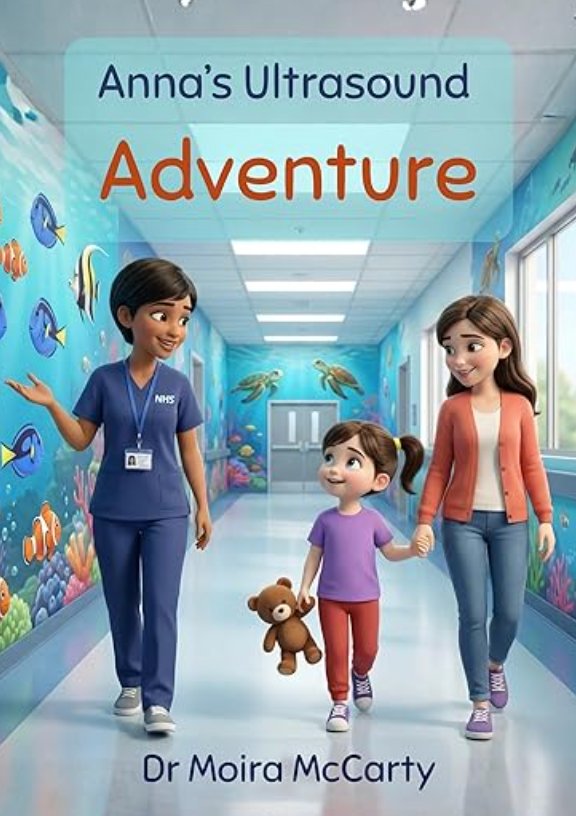
Imagine being three years old, unable to fully understand language, and being taken into a cold, dark room by a stranger who asks you to lie on a hard bed while they press a cold, wet probe against your tummy. You do not know why this is happening, how long it will take, or whether it will hurt. You cannot ask. You cannot leave.
Now imagine the same scenario, but you are autistic. The hum of the ultrasound machine is unbearably loud. The ultrasound gel feels like something deeply wrong against your skin. The darkened room is disorienting. The stranger is making eye contact and talking in sentences that trail past you. And the only thing you know for certain is that nobody prepared you for any of this.
This is the reality for thousands of autistic children undergoing medical procedures every year. And it does not have to be this way.
The Problem: Medical Procedures and Autism
Medical procedures — blood tests, scans, dental visits, vaccinations, and hospital stays — are stressful for all children. But for autistic children, they present a uniquely challenging combination of sensory assault, unpredictability, communication barriers, and loss of control.
Research consistently demonstrates that autistic children experience significantly higher levels of procedural anxiety and distress compared to their neurotypical peers. A study by Davit et al. found that 77% of parents reported moderate to high anxiety during their autistic child’s medical procedures, with 53% describing them as “extremely difficult” (1).
The consequences are significant:
- Procedure failure: Examinations or scans cannot be completed, leading to diagnostic delays
- Need for sedation or general anaesthetic: Avoidable if preparation were adequate, but necessary when a child cannot cooperate
- Trauma: Negative medical experiences create lasting fear, making future procedures even more difficult — a vicious cycle of avoidance and forced interventions
- Health inequalities: When procedures are too difficult, they are deferred or abandoned, contributing to the well-documented health disparities experienced by autistic individuals (2)
Why Preparation Matters
The evidence for preparation is robust. A systematic review by Sanpallia et al. found that pre-procedural preparation reduces anxiety, improves cooperation, and decreases the need for sedation in children undergoing medical procedures. The effect is particularly strong for children with neurodevelopmental conditions, where standard verbal explanations are inadequate (3).
Effective preparation works through several mechanisms:
1. Predictability Reduces Anxiety
For autistic children, who often rely heavily on predictability and routine, the unknown is inherently threatening. Preparation converts an unknown experience into a known sequence: “first this will happen, then this, then this.” Research on intolerance of uncertainty in autism shows that it is one of the strongest predictors of anxiety, more so than in neurotypical populations (4).
2. Sensory Previewing
Knowing in advance what something will feel like (the cold gel, the pressure of the probe, the dark room) allows sensory preparation that reduces the shock response. Some children can practice with the actual materials in advance — handling ultrasound gel, for example, or sitting on an examination bed.
3. Control and Choice
Preparation gives children a sense of agency. Even small choices — “Would you like to sit or lie down?”, “Do you want Mummy or Daddy with you?” — reduce the sense of powerlessness that drives much procedural distress.
4. Emotional Regulation
When a child knows what to expect, they can prepare their coping strategies in advance: bringing a comfort object, wearing ear defenders, having a reward planned afterwards.
The Evidence for Picture Books and Social Stories
Social Stories
Social Stories, developed by Carol Gray, are the most extensively researched preparation tool for autistic children. These are short narratives that describe a situation from the child’s perspective, including what will happen, what people will do, and how the child might feel. A meta-analysis by Qi et al. found a moderate positive effect of social stories on reducing anxiety and improving adaptive behaviour in autistic children, with medical procedures being one of the most effective application areas (5).
Picture Books
Picture books go further than social stories by providing a narrative framework — a character the child can identify with who goes through the experience and emerges safely. This serves several additional functions:
- Modelling: The child sees a character coping with the situation, which provides a template for their own behaviour (Bandura’s social learning theory applies here, even for autistic children, though the mechanism may differ) (6)
- Emotional processing: The book can be read repeatedly, each time allowing the child to process and habituate to the emotions associated with the procedure
- Language building: It provides vocabulary for the experience — “ultrasound,” “gel,” “screen,” “picture of your tummy” — that reduces the bewildering novelty of medical language
- Shared reading: Reading the book with a parent creates a safe relational context for processing potentially scary information
- Re-reading for mastery: Unlike a verbal explanation, a book can be revisited as many times as needed — crucial for autistic children who may need more repetition to process new information
Combination Approaches
The most effective preparation typically combines multiple elements. A study specifically examining preparation for children undergoing imaging procedures found that combining picture books, virtual familiarisation tours, and pre-visit checklists significantly reduced the need for sedation (7).
Anna’s Ultrasound Adventure
Anna’s Ultrasound Adventure by Dr Moira McCarty is a picture book designed specifically to prepare children for ultrasound scans. Written by a clinician who understands both the medical procedure and the child’s perspective, it follows Anna as she goes for an ultrasound at the hospital.
The book works as a preparation tool because it follows the principles that the research identifies as effective:
- It normalises the experience: Anna is not frightened — she is curious. The hospital is presented as a friendly, non-threatening environment with colourful walls and supportive staff
- It shows the sequence: The child (and parent) can see exactly what will happen, in what order, before they arrive
- It addresses sensory elements: The gel, the probe, the dark room, the screen — all the sensory aspects that might otherwise be a shock are previewed in a safe, child-friendly context
- It brings a comfort object: Anna brings her teddy bear Tedrick, modelling the strategy of bringing a familiar comfort item
- It is re-readable: A child can go through the book dozens of times, each time building familiarity and reducing novelty
- It includes a companion app: A digital version with a virtual scan room that allows further familiarisation
The book also comes with a pre-visit checklist that parents can use to prepare practically — packing comfort items, choosing appropriate clothing, planning the journey.
Practical Recommendations for Preparing Autistic Children
Based on the evidence, here is a step-by-step approach for families and clinicians:
Before the Appointment
-
Get specific information: Ask the hospital or clinic exactly what will happen during the procedure. What room will it be in? How long will it take? Will it be dark? Will anything touch the child?
-
Use a preparation book: Read a book like Anna’s Ultrasound Adventure repeatedly in the days leading up to the appointment. Let the child lead the reading and ask questions.
-
Create a visual schedule: Use pictures or symbols to show the sequence: car journey → hospital → waiting room → scan room → scan → all done → [reward].
-
Practice sensory elements: If possible, let the child handle ultrasound gel (aqueous gel from a pharmacy is similar), practise lying on a hard surface, and experience a darkened room with a screen.
-
Plan comfort strategies: Pack ear defenders, sunglasses (for bright lights), a comfort object, a favourite snack for afterwards, and a tablet or device with preferred content.
-
Arrange reasonable adjustments: Contact the service in advance and request:
- First appointment of the day (quieter waiting room)
- A pre-visit to see the room
- Permission for the child to sit on a parent’s lap rather than lie on the bed
- Reduced waiting time
- A quiet waiting area
During the Procedure
-
Bring the book: Having the picture book present during the actual procedure provides a reference point: “Look, this is what Anna did!”
-
Allow time: Do not rush. Autistic children often need more processing time. A scan that takes 10 minutes in a neurotypical child may take 30 minutes with an autistic child — and that is fine.
-
Maintain the child’s control: Offer choices wherever possible. “Do you want the gel on your tummy first or on Teddy’s tummy first?”
-
Use clear, concrete language: “I’m going to put cold gel on your tummy now” rather than “We’re just going to have a little look.”
After the Procedure
-
Celebrate: Whatever happened, the child went. Acknowledge that with genuine praise and a planned reward.
-
Debrief using the book: Re-read the book after the appointment, connecting the child’s actual experience to the story.
-
Create a record: Take a photo of the child at the hospital (if they are comfortable). This becomes part of their personal narrative: “I went for a scan and it was OK.”
Why This Matters for Health Equity
The gap between the healthcare experiences of autistic and non-autistic children is not inevitable. It is, in large part, a failure of preparation, communication, and reasonable adjustment.
When a scan fails because a child was not prepared, that child joins a waiting list for sedation or general anaesthetic. They wait weeks or months longer for their diagnosis. They undergo an avoidable anaesthetic with its own risks. And they learn that medical settings are places of distress and coercion, making every future encounter harder.
Picture books and social stories are not luxuries. They are evidence-based tools that reduce anxiety, improve cooperation, and improve health outcomes. They cost a few pounds. They take a few minutes to read. And they can transform a child’s experience of healthcare.
Every paediatric department, GP surgery, and imaging service should have preparation materials available. Every clinician who works with autistic children should know that preparation is not optional — it is a reasonable adjustment that the evidence demands.
Anna’s Ultrasound Adventure by Dr Moira McCarty is available on Amazon in paperback. A companion app is available for further familiarisation.
References
- Davit CJ, Hundley RJ, Bacic JD, Sathe NA. A pilot study to improve venipuncture compliance in children and adolescents with autism spectrum disorders. Journal of Developmental and Behavioral Pediatrics. 2011;32(7):521-525.
- Nicolaidis C, Raymaker D, McDonald K, et al. The development and evaluation of an online healthcare toolkit for autistic adults and their primary care providers. Journal of General Internal Medicine. 2016;31(10):1180-1189.
- Sanpallia M, D’Agostino F, Alvaro R, et al. Effectiveness of non-pharmacological interventions for reducing procedural anxiety in children undergoing medical procedures: A systematic review. Journal of Clinical Nursing. 2020;30(15-16):2149-2169.
- Boulter C, Freeston M, South M, Rodgers J. Intolerance of uncertainty as a framework for understanding anxiety in children and adolescents with autism spectrum disorders. Journal of Autism and Developmental Disorders. 2014;44(6):1391-1402.
- Qi CH, Barton EE, Collier M, Lin YL. A systematic review of single-case research on social story interventions for individuals with autism. Focus on Autism and Other Developmental Disabilities. 2018;33(1):25-34.
- Bandura A. Social Learning Theory. Englewood Cliffs, NJ: Prentice Hall; 1977.
- Jaaniste T, Hayes B, von Baeyer CL. Providing children with information about forthcoming medical procedures: A review and synthesis. Clinical Psychology: Science and Practice. 2007;14(2):124-143.