The Cliff Edge at 18: Why Autistic Young People Are Falling Through the Transition Gap
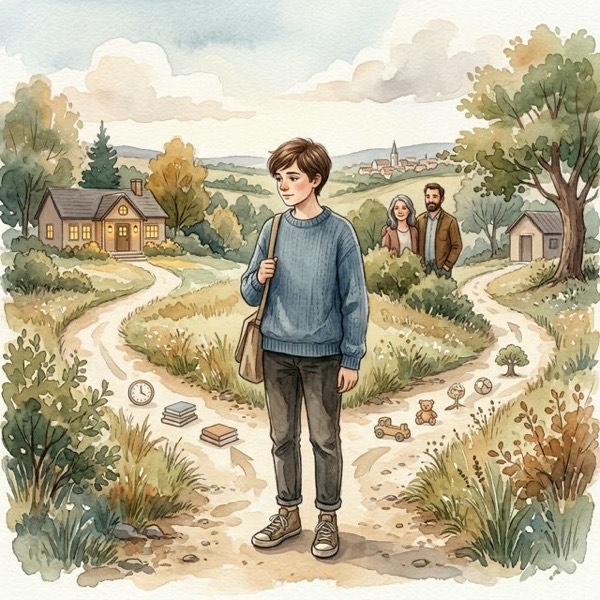
Only 4% of young people experience an “ideal” transition from children’s to adult mental health services. For autistic young people, the odds are even worse. New research, a House of Lords inquiry, and a major government review are finally forcing this crisis into the open.
Introduction
Every year in England, over 25,000 young people reach the age boundary where Child and Adolescent Mental Health Services (CAMHS) end and Adult Mental Health Services (AMHS) are supposed to begin. For most, this is not a smooth handover. For autistic young people, it is often a cliff edge — a sudden loss of support at precisely the moment when life becomes more complex.
The numbers are stark. Research consistently shows that only around 4% of young people experience what could be called an “ideal” transition. Between a quarter and half disengage from mental health services entirely after leaving CAMHS. A third experience disruption or loss of care. And autistic young people are half as likely as those with other complex healthcare needs to receive any transitional care at all.
As a consultant neurodevelopmental paediatrician, I see this from both sides. I work with families who have spent years building relationships with paediatric services, understanding their child’s needs, and developing support plans — only to watch it all unravel when their young person turns 18. The research published in 2025 and early 2026 confirms what families have been telling us for years: the system is failing them.
What the Latest Research Tells Us
The barriers are institutional, not individual
A new scoping review by Tang and colleagues, published in Child: Care, Health and Development in 2026, examined barriers to and enablers of the transition from CAMHS to AMHS specifically for autistic young people and those with ADHD (1). After screening over 1,600 records, the authors found that the most significant barriers were institutional — poor communication between children’s and adult services, lack of clarity about professional roles during transition, and gaps in adult services for people with neurodevelopmental conditions.
This finding matters because it shifts the conversation away from the young person. The problem is not that autistic teenagers are “difficult to transition.” The problem is that services are not designed to transition them.
The review also identified enablers: involving the young person in decisions about their own care, and clinicians who adapted their approach to neurodivergent needs. These sound obvious. That they need to be stated as research findings tells you how far current practice falls short.
The CAMHS-AMHS model mismatch
A fundamental problem — documented repeatedly and still unresolved — is that children’s and adult services operate on entirely different models. CAMHS is family-centred. It works with schools, involves parents, coordinates across agencies, and takes a developmental perspective. AMHS is individually focused, more clinical, with less family engagement and a higher threshold for entry.
For autistic young people who may rely on family support structures and struggle with the sudden expectation of autonomous self-advocacy, this shift is not just inconvenient — it can be genuinely harmful. Shahid and colleagues, studying CAMHS clinicians in England, found discharge pathways to be “poorly managed,” with goal-setting and managing family expectations identified as key facilitators of safer discharge (2).
Co-occurring conditions compound the problem
A 2025 Dutch study by Torenvliet and colleagues examined the overlap of physical and mental health conditions in autistic adults (3). The findings are striking: autistic adults were 6 to 34 times more likely than non-autistic adults to have mood disorders (45%), anxiety (22%), or personality disorders (21%). Physical health was also affected — significantly higher rates of bowel conditions (27%), allergies (48%), and thyroid problems.
This means transition cannot be about autism in isolation. An autistic young person leaving paediatric services may simultaneously need adult epilepsy care (25-40% of autistic people have epilepsy), mental health support, ADHD management, and ongoing monitoring of physical health conditions. When services fragment at 18, all of these strands can unravel at once.
Vinayan, writing in the Annals of Indian Academy of Neurology in 2025, found that autism alongside epilepsy represents “the most difficult” combination for transition, with fewer than half achieving desired transition outcomes even in countries with established guidelines (4).
Rural areas fare worse
Ghanouni and Naimpally studied autistic young people transitioning to adulthood in rural Atlantic Canada and found three central problems: transportation barriers (commutes exceeding four hours to access services), resources concentrated in urban centres, and abrupt cessation of paediatric services at 18 with no structured transition planning (5). A separate 2025 pilot study comparing rural and urban transition experiences confirmed that autistic young people in rural areas experience more unmet medical needs during healthcare transition (6).
This resonates strongly in the UK context. In the North East, where I practise, many families face significant travel to access specialist services, and the availability of adult neurodevelopmental provision varies enormously between areas.
What the caregivers say
Wolpe and colleagues interviewed caregivers of autistic young people in California (7). Nine out of ten experienced abrupt service loss after their child left school — the “services cliff.” Waiting times for critical adult services exceeded a year. Employment rates for autistic young adults remained low, and caregivers bore the primary financial and organisational burden of navigating complex systems.
The authors’ conclusion bears repeating: systemic barriers — not autism itself — create the greatest challenges.
The UK Policy Response
The House of Lords: “Time to Deliver”
In November 2025, the House of Lords Select Committee on the Autism Act 2009 published its report, Time to Deliver (8). The committee was unequivocal: autistic people “often need most support just at the times of transition in life” — the exact moments when support is “most likely to fall away.”
The report found that the national autism strategy (2021-2026) had lacked a costed delivery plan after its first year. It recommended that a new strategy be ready to launch in July 2026, with integrated services covering education, employment, housing, and mental health during transition.
The government’s response
In January 2026, the government responded (9). It acknowledged transitions as important but framed solutions through existing initiatives — expanding Youth Hubs to every local area, backed by an investment of 820 million. Notably, it did not specifically address the cliff edge at 18. The response referenced ongoing support through integrated neighbourhood health services but offered no new transition-specific programmes for autistic young people.
The Fonagy Review
Perhaps the most significant development is the independent review into mental health, ADHD, and autism services, launched in December 2025 and chaired by Professor Peter Fonagy, with Vice-Chairs Professor Sir Simon Wessely and Professor Gillian Baird (10). The review will examine how the health system delivers services for these overlapping conditions, with separate consideration of children and adults.
The review was launched alongside data showing that 227,813 patients were waiting for an autism assessment in England as of September 2025 — a 13-fold increase since April 2019. Over 90% were waiting longer than the NICE-recommended 13 weeks, with average waiting times exceeding 16 months.
The Fonagy review is expected to report in summer 2026. Its findings could reshape transition policy, particularly if it addresses the mismatch between children’s and adult service models.
The HSSIB Investigation
The Health Services Safety Investigations Body (HSSIB) investigated the CAMHS-to-AMHS transition after the death of “Ben,” an 18-year-old with autism and suicidal ideation who died by suicide shortly after transitioning between services (11). The investigation described transition as “fragmented and inconsistent” and recommended moving from age-based to needs-based transition criteria. Rethink Mental Illness echoed these findings, calling the current system dangerous.
What Helps: Emerging Evidence for Better Approaches
Strengths-based transition
Rumsa and colleagues published a scoping review in Autism examining strengths-based approaches for autistic adolescents in transition (12). They mapped five types of intervention: transition planning, employment preparation, technology programmes, peer mentoring, and cognitive skills training. A key finding was that most programmes lacked validated measures for assessing autistic young people’s strengths — the focus remains overwhelmingly on deficits. The review calls for a shift toward leveraging individual interests and skills, and developing individualised transition processes.
The STEPS programme
One of the most promising developments is the STEPS (Stepped Transition to Employment and Postsecondary Success) programme, piloted by Brewe and White in a community setting with 12 autistic individuals aged 16-35 (13). STEPS is goal-oriented: participants identify real-life aspirations — arranging a mock job interview, planning a solo bus journey — and practise the skills needed. The pilot showed high feasibility, strong therapeutic alliance, low attrition, and preliminary improvements in transition readiness and self-efficacy.
This is the kind of practical, person-centred approach that could make a real difference if scaled. It treats autistic young people as agents in their own lives, not passive recipients of services.
What This Means in Practice
For families with autistic children approaching transition:
-
Start planning early. NICE guidance recommends transition planning should begin by age 14. In practice, many families report it starts far too late or not at all. Ask your child’s paediatrician or CAMHS team: What is the transition plan? Who is responsible for coordinating it? What adult services will be available?
-
Request a key worker. NICE CG170 recommends every autistic young person should have a case manager or key worker to coordinate transition. If your child doesn’t have one, ask why not.
-
Map the co-occurring conditions. If your child has epilepsy, ADHD, anxiety, sleep problems, or dietary difficulties alongside autism, each of these needs a transition plan. Don’t assume one service will communicate with another.
-
Keep your own records. Detailed records of your child’s history, what works, and what doesn’t can be invaluable when adult services are starting from scratch.
-
Know that you are not alone. The fact that transition fails so many families is a system failure, not a personal one.
For clinicians:
-
The Tang et al. (2026) review provides the best current evidence base for designing autism-specific transition pathways. The barriers are institutional. Advocacy for systemic change is part of our professional responsibility.
-
Involve families. The sudden shift from family-centred to individually focused care is one of the most damaging aspects of the current model. Adult services can and should involve families where the young person consents.
-
Screen for co-occurring conditions at transition. A University of Maryland programme evaluating 305 adults with neurodevelopmental disorders found that 9 individuals were diagnosed with seizures for the first time during adult visits — conditions that had gone undetected during transition (14).
-
Watch the Fonagy review. Due summer 2026, it represents the best opportunity in a generation to reshape how autism services are delivered across the age boundary.
Key Takeaways
-
Only 4% of young people experience an “ideal” transition from CAMHS to AMHS. Autistic young people fare even worse.
-
The barriers are institutional, not individual — services need to change, not patients.
-
Co-occurring conditions (epilepsy, ADHD, anxiety, depression) mean transition must be multi-disciplinary, not single-condition.
-
The House of Lords Time to Deliver report (November 2025) called the transition a “cliff edge.” The government’s January 2026 response offered no new transition-specific programmes.
-
The Fonagy Review (reporting summer 2026) could reshape transition policy — families and clinicians should engage with it.
-
NICE recommends needs-based, not age-based transition — advocate for this in your area.
-
Strengths-based, person-centred programmes like STEPS show promise but need scaling.
-
227,813 patients were waiting for autism assessment in England as of September 2025 — a 13-fold increase since 2019.
Where to Find Support
-
Your child’s paediatrician or CAMHS team — ask specifically about transition planning and key worker allocation.
-
National Autistic Society (autism.org.uk) — comprehensive transition guidance and helpline (0808 800 4104).
-
NICE NG43 — Transition from children’s to adults’ services (nice.org.uk/guidance/ng43).
-
Council for Disabled Children (councilfordisabledchildren.org.uk) — resources on the legal framework for transition.
-
Transition Ready (transitionready.app) — a free app based on the NHS Ready Steady Go framework, helping young people aged 11-18+ prepare for the move to adult services.
-
Contact (contact.org.uk) — support for families of disabled children navigating transitions.
-
Your local Healthwatch — can help you understand what services are available in your area and raise concerns.
References
-
Tang, K., Hill, E., Pellicano, E., Thompson, C., & Myers, B. (2026). Barriers to and enablers of the transition from child to adult mental health services for autistic young people and/or those with ADHD: a scoping review. Child: Care, Health and Development. https://onlinelibrary.wiley.com/doi/10.1111/cch.70201
-
Shahid, S., De Simone, T., Appleton, R., & Bisp, S. (2025). Exploring barriers and facilitators of discharging CYP from CAMHS. Clinical Child Psychology and Psychiatry. https://journals.sagepub.com/doi/10.1177/13591045251340490
-
Torenvliet, C., Radhoe, T.A., & Geurts, H.M. (2025). Occurrence and overlap of physical and mental health conditions in autistic adults. Autism. https://journals.sagepub.com/doi/10.1177/13623613251362346
-
Vinayan, K.P. (2025). Transition of care for pediatric neurologic disorders — are we there yet? Annals of Indian Academy of Neurology, 28(1), 26-31. https://pmc.ncbi.nlm.nih.gov/articles/PMC11892974/
-
Ghanouni, P. & Naimpally, T. (2025). Insights into healthcare services for youth with ASD transitioning to adulthood: a focus on rural Atlantic Canada. BMC Health Services Research. https://bmchealthservres.biomedcentral.com/articles/10.1186/s12913-025-12741-6
-
Health care transition for autistic adolescents and young adults: a pilot rural and urban comparison survey study. (2025). Autism. https://pubmed.ncbi.nlm.nih.gov/39673373/
-
Wolpe, S.M., Johnson, A.R., & Kim, S. (2025). Navigating the transition to adulthood: insights from caregivers of autistic individuals. Journal of Autism and Developmental Disorders, 55(1), 166-180. https://pmc.ncbi.nlm.nih.gov/articles/PMC11802696/
-
House of Lords Select Committee on the Autism Act 2009. (2025). Time to Deliver. November 2025. https://publications.parliament.uk/pa/ld5901/ldselect/ldautismact/205/20502.htm
-
HM Government. (2026). Government response to Lords Select Committee’s report: Time to Deliver. 23 January 2026. https://www.gov.uk/government/publications/autism-act-government-response-to-lords-select-committee-report/
-
Department of Health and Social Care. (2025). Independent review into mental health conditions, ADHD and autism: terms of reference. 4 December 2025. https://www.gov.uk/government/publications/independent-review-into-mental-health-conditions-adhd-and-autism-terms-of-reference/
-
Health Services Safety Investigations Body. (2025). Transition from child and adolescent mental health services to adult mental health services: investigation report. https://www.hssib.org.uk/patient-safety-investigations/transition-from-child-and-adolescent-mental-health-services-to-adult-mental-health-services/investigation-report/
-
Rumsa, S., Afsharnejad, B., Lee, E.A.L., Bolte, S., Tan, T., & Girdler, S. (2025). A scoping review of current approaches to strengths-based transition practices for autistic adolescents. Autism. https://journals.sagepub.com/doi/10.1177/13623613251346336
-
Brewe, A.M. & White, S.W. (2025). Pilot trial of a community-based transition support program for autistic adults (STEPS). Autism in Adulthood. https://journals.sagepub.com/doi/10.1177/27546330251319884
-
University of Maryland School of Medicine. (2025). Treating adults with autism: Maryland clinical center offers national blueprint for care after pediatric transition. https://www.medschool.umaryland.edu/news/2025/treating-adults-with-autism-maryland-clinical-center-offers-national-blueprint-for-care-after-pediatric-transition.html
-
NHS Digital. (2025). Autism Statistics, January 2025 to December 2025. https://digital.nhs.uk/data-and-information/publications/statistical/autism-statistics/january-2025-to-december-2025